Over the past ten years, there has been increasing interest by homeowners and contractors for durable, eco-friendly engineered wood floors. But what exactly is engineered wood flooring, and how does it vary from traditional hardwood? In this article, we will explain particular type of flooring and discuss what it is made from, its advantages and where it works best. Whether you’re improving your home with a renovation, or even if you’re building from ground up, learning about engineered wood can make sure you are decorated to make the best decision for your floor.
Types of Engineered Hardwood Flooring
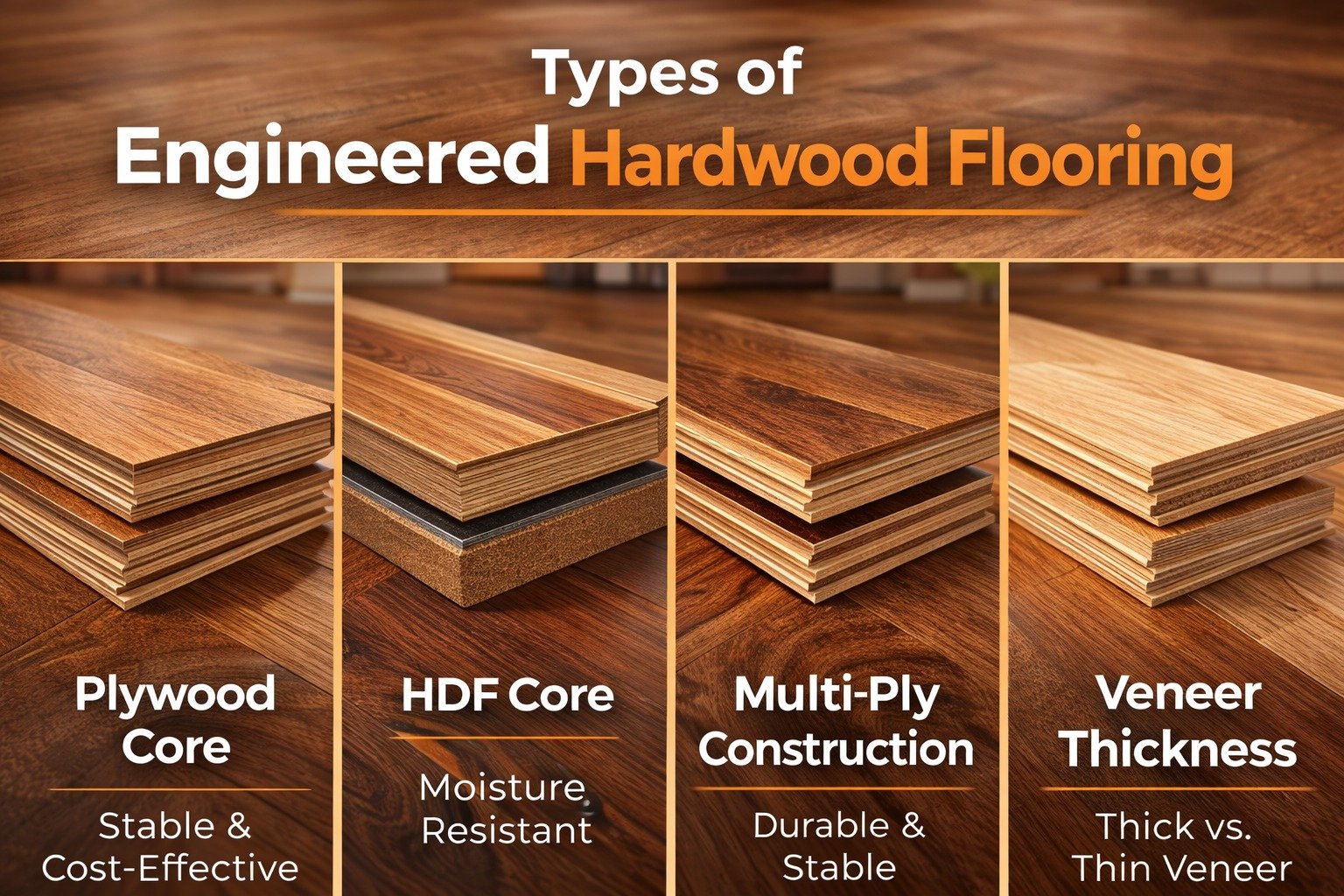
Types of Engineered Wood Flooring There are different core styles available with engineered wood flooring which provide benefits in their own particular way. On the other hand, plywood core is the most popular and extremely powerful actual layers of wood veneer bonded together itself to offer stability as well as strength. The HDF (High Density Fiberboard) core provides greater resistance to moisture and can be installed in some commercial applications. The multi-ply core (which consists of layers of wood and Fiberboard) adds additional durability and stability. Solid veneer thickness variations are also a factor in establishing the amount of wear resistance and aesthetics of the flooring. Thicker buckling veneers can offer an enhanced feel of real wood and longer lasting performance.
Plywood Core: Constructed from layers of wood veneer, this core provides stability and strength with less tendency to expand and contract due to the changing atmosphere. It’s inexpensive and works in most home areas.
HDF Core: HDF is an engineered wood product designed and tested to provide heavy-duty, moisture resistance and high stability, perfect for installation in rooms with water exposure such as kitchens and bathrooms.
Multi-Ply Construction: It is made up of several layers of plywood or HDF for more strength and stability. It’s great for high-traffic areas or spaces that experience temperature changes below the flooring.
Veneer Gauge: The amount of the base layer of wood determines both appearance and durability. Thicker veneers give you an authentic look and can be refinished; thinner ones are more budget-friendly but not as durable.
These variations allow homeowners to select flooring that fits their needs for resistance, looks and maintenance.
Is Engineered Wood Flooring Waterproof
Before choosing engineered wood flooring for high- moisture areas (like kitchens, basements, and some homes in humid climates), you should know the difference between water-resistant and waterproof. Low-water flooring can tolerate some water, but if left for an extended period, will absorb it. Waterproof that is totally immune to water from penetrating the material. As sturdy and reliable as it is, engineered wood flooring is not waterproof. Spills should be wiped up right away in kitchens or basements to prevent potential damage. What you need to know is that in high-humidity regions, even the finest engineered wood flooring with moisture repellent features won’t stand up to standing water which means extra care must be taken during installation. To achieve best results, select a high quality product with an HDF or multi-ply core that is sensitive to moisture and make sure the surface of your floor level is clean, smooth and dry before you begin to install T-Molding as failure to do so will compromise the covering.
Engineered Hardwood vs Solid Hardwood Flooring
Here’s a comparison table idea for Engineered Hardwood vs Solid Hardwood Flooring, covering key aspects like durability, cost, installation, refinishing, and moisture tolerance:
| Feature | Engineered Hardwood | Solid Hardwood |
| Durability | Highly durable, resistant to expansion/contraction | Can dent or warp over time with changes in humidity and temperature |
| Cost | More affordable, typically 10-30% less than solid hardwood | Generally more expensive because of the use of solid wood |
| Installation | Easier and quicker to install, often with click-lock systems or glue-down | Requires nail-down or staple-down installation, more labor-intensive |
| Refinishing | Can be refinished 1-3 times depending on the veneer | Can be refinished multiple times throughout its lifespan |
| Moisture Tolerance | Better moisture resistance, ideal for basements, kitchens, and bathrooms | Less moisture resistant, may expand or warp in high humidity areas |
Engineered Wood Flooring Over Concrete
Engineered wood flooring can be installed on concrete using the direct glue-down method and recommended adhesives. With glue-down installation, the floor is stable and rugged enough for commercial use in high traffic areas but on the other hand with floating installation, planks click lock together easily and can be put into place without using adhesive. Moisture barriers, such as vapor or polyethylene barriers, are needed to avoid damage caused by moisture in the concrete. For a longer lasting floor, make sure the concrete is well drained (no standing water), clean of loose debris & dry and level before installation. Do moisture tests and smooth with a self-leveling compound. It is these crucial steps that ensure a long lasting, beautiful engineered wood floor for years to come.
Best Engineered Wood Flooring for Kitchens
The best engineered wood flooring for kitchens is one that is durable, strong, stands up to moisture, and is easy to care for, moisture-resistant, and easy-to-care-for option. Seek a floor with a solid core multi‑ply (many layers) or high density that won’t flinch in the face of humidity and spills. Types of finishes count: Durable, UV-cured aluminum oxide or ceramic-enhanced coatings resist scratches and stains common in bustling kitchens. An2-3mm wear layer gives longevity and refinishing ability. Ensure you opt for textured or matte finishes that will disguise minor scratch marks in your everyday use. Tips for Maintenance: Promptly wipe spills with a damp cloth, use mild cleaners that are formulated for wood and put protective pads under furniture. Engineered wood can marry warmth and wearability in the kitchen provided that its construction is geared toward durability.
Disadvantages of Engineered Wood Flooring
Advantages and Disadvantages of Engineered Wood Flooring Although engineered flooring provides great value and is more adaptable to the natural elements than hardwood, it does have its drawbacks. They are lack of refinishing potential, susceptibility to veneer wear, more expensive than laminate, and the noise against other floating floors. Knowing these is important when you are deciding if engineered wood is the right fit for your situation.
Refinishing: Engineered wood often features a thinner wear layer than solid hardwood, preventing it from being sanded down and refinished repeatedly. Your options are pretty limited when that top layer is gone anything torn to shreds will have a look replaced by no one, unless you chip up the solid wood ones, and might I remind you those can be refinished.. decades from now if they ever loose their appeal.
Veneer Wear: The veneer of engineered wood can wear away over time, especially in high-traffic areas. The veneer is strong, but scratches, dents or wear may make the veneer lose its color or get transparent enough to see through to the surface beneath. Once the veneer is gone, it’s gone.
Cost vs Laminate: Generally, engineered wood is more expensive than laminate as they are intended to imitate the real thing. Laminate is typically less expensive, but don’t look quite as natural wood and distinguished as an engineered plank.
Sound problems with Floating Floors: A floating floor is meant to be as such; planks are not glued or fastened down solidly in any form. The reason for this is that the planks are not fully adhered to the subfloor, so you lose the strength of connection under foot, especially in larger rooms or higher traffic areas.
How Long Does Engineered Wood Flooring Last
How long does engineered wood last? The longevity of real wood flooring depends on many things, like veneer cut thickness and quality, traffic levels or how well you look after it. The thicker the veneer layer, the more durable the floor, because you can sand it down and refinish it a few times during its life. The amount of traffic a space gets matters too high-traffic spaces, like kitchens or hallways, will wear out faster than less-used rooms. Last but not least, the quality of maintenance is crucial for the long service life of engineered wood flooring. Frequent cleaning, prompt wipe-up of spills and placing protective pads beneath furniture can help to prevent scratches and further extend the floor’s life. On average, engineered wood floor generally lasts 20 to 30 years but with proper maintenance can last even longer than that.
Conclusion
Engineered wood flooring offers a durable, cost-effective alternative to solid hardwood floors and is available in a variety of options including a variety of core types as well as unfinished and pre-finished versions. How long it will last is based on a variety of factors such as veneer thickness, traffic and maintenance. Although it is not waterproof, the adhesive used ensures that water should only be considered a mild threat with proper and well done installation.