The choice of engineered wood flooring vs hardwood vs laminate ends up being the correlation between quality and price. Both have unique qualities based on their make-up, costs and durability. At 2ndflooring All of them understand that this is a very important place than here to decision on your house. In this article, we’ll compare engineered wood flooring vs hardwood vs laminate so that you’re able to weigh the pros and cons of each option; similar to how my engineer weighs a car.
Which one is better, hardwood or engineered hardwood?
Solid hardwood vs. engineered hardwood It’s largely a matter of what is most important to you and understanding the difference between solid and engineered wood when it comes to the impact on your home, budget and climate. 9. Solid hardwood Solid wood is also long-lasting so long that if you’re purchasing high-quality, solid hardwood it may literally last a century or more and can be refinished two or three times. It is, however, smaller and therefore more vulnerable to humidity, and needs a dry stable atmosphere. Harder still is an engineered hardwood with a real wood veneer bonded to several layers typically a plywood base. This construction offers more stability, so the wood planks are moisture resistant and it can be installed over a concrete subfloor as well as below grade, like in a basement or on radiant heat. Less expensive engineered wood flooring is also made with adhesives and petroleum products, leading to emissions of volatile organic compounds from the glues used in its assembly, but it can be sanded down and refinished only once or twice before being replaced.
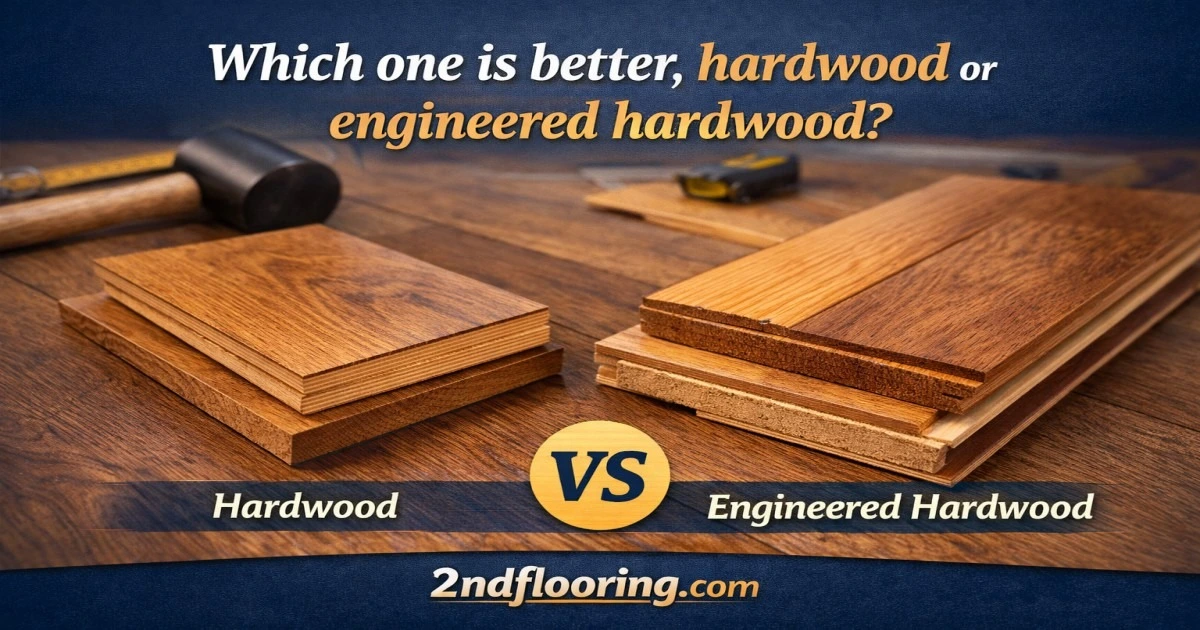
Hardwood:
- Very durable (lasting up to 100 years) and can be refinished many times.
- Perfect for drier, more stable environments such as living rooms and bedrooms.
- More expensive and sensitive to moisture and temperature.
Engineered Hardwood:
- Cheaper and simpler to install.
- More moisture resistant so you can use it in kitchens, basements, and over radiant heating.
- Limited ability to be refinished (depending on veneer thickness).
- Provides solid stability and durability but with an average life of 25-40 years.
Laminate wood flooring vs engineered hardwood
When it comes to comparing engineered hardwood and laminate flooring, the advantages are based on material: Engineered hardwood looks and feels just like solid wood, but it offers greater moisture resistance so you can place it in areas such as below grade basements or kitchens. But it is more expensive, and could also be higher maintenance. Laminate is a low-cost, scratch- and moisture-resistant alternative to hardwood with that can’t be refinished. It’s a great option in busy areas, but not so much in moisture-heavy spaces.
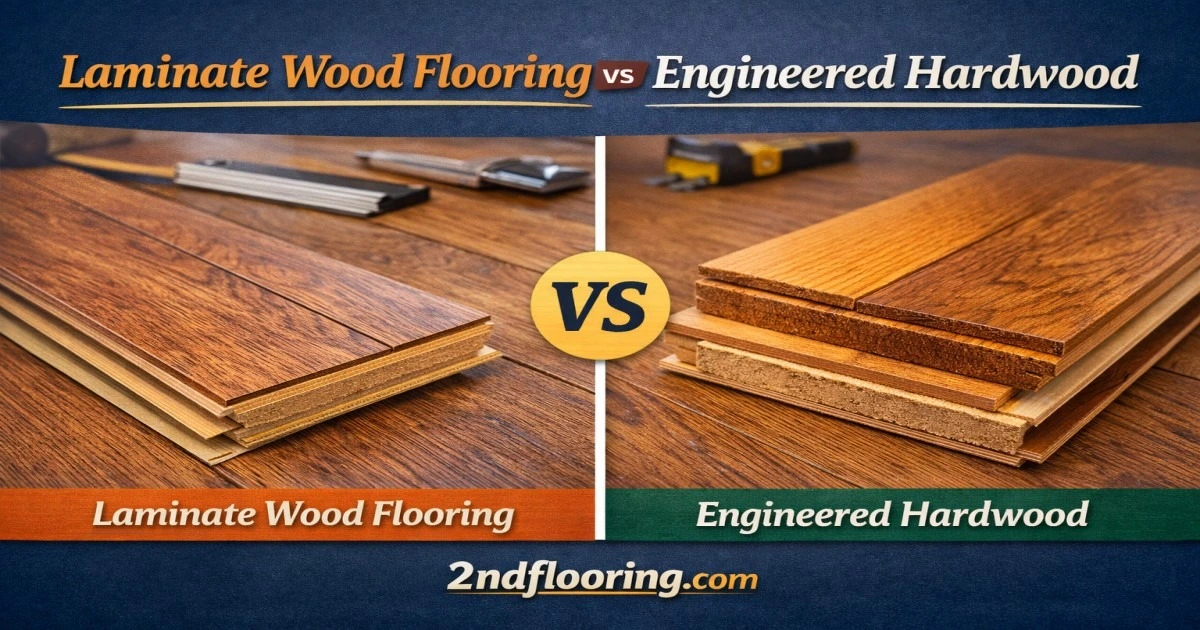
| Feature | Engineered Hardwood Flooring | Laminate Flooring |
| Cost | Generally higher, depending on the veneer thickness and brand. | More affordable, ideal for budget-friendly spaces. |
| Durability | Real wood veneer; can be sanded and refinished; prone to scratches. | Highly durable and scratch-resistant, but not refinish able. |
| Water Resistance | More resistant to moisture than solid hardwood; not fully waterproof. | Good surface resistance; can swell if moisture gets underneath. |
| Installation | Requires a stable subfloor; can be nailed, glued, or floated. | DIY-friendly, easy snap-together planks; floating installation. |
| Appearance | Real wood veneer provides an authentic, natural look. | Advanced printing to replicate wood, but feels less authentic. |
| Maintenance | Requires careful cleaning; avoid excessive moisture and harsh cleaners. | Easy to maintain; avoid wet mops and harsh polishes. |
| Lifespan | Typically lasts 20–40 years; can be refinished if thick veneer. | Lasts 10–25 years; cannot be refinished. |
What is the disadvantage of engineered wood?
Pros And Cons Of Engineered Hardwood Flooring There are lots of pros and cons accompanying both solid hardwood and engineered wood. Its major disadvantage is the lower refinish potential; the thin face of a veneered piece can only be sanded and refinished once or maybe twice, this limits the length of its service compared to solid wood. Water resistance is another worry, as it’s more stable than solid wood but still susceptible to warping or delamination with exposure to moisture in high-humidity environments. Engineered wood is also susceptible to surface damage, such as scratches and dents, which tend to develop in high-traffic locations. Propylene glycol, VOCs and adhesives in some lower-quality products can impact indoor air*quality, while the quality of engineered wood flooring varies widely from one manufacturer to another. And you should consider the fading effects from exposure to sunlight and budget — even though engineered wood is generally cheaper than solid hardwood, top-of-the-line versions can be expensive and won’t necessarily add as much resale value.
What is the healthiest flooring for a home?
The healthiest type of flooring for home use is if favoring indoor air quality, cleanability and non-toxic material. Something like solid wood, natural linoleum, cork and bamboo are fantastic choices, since they are durable, easy to clean and usually have low levels of volatile organic compounds (VOCs). These materials are also very frequently sustainable to offer a healthier alternative for you and planet earth. Or seek out third-party certifications such as Greengard Select and FSC certification to guarantee low emissions and sustainable sourcing. Tile and stone are also excellent choices, particularly for rooms with a lot of moisture. For those concerned about chemical outgassing and allergies, skip the wall-to-wall carpets and vinyl (PVC). Never forget your local home requirements, moisture will dictate what species to avoid you not want any mold.
Is laminate or LVT better?
LVT vs Laminate Flooring When considering LVT (Luxury Vinyl Tile) and laminate flooring, both are excellent choices based on your needs. LVTs are typically constructed with four layers of PVC, so they’re extremely water-resistant and suitable for areas with dampness and humidity, such as kitchens or bathrooms. -It’s also available in a variety of styles, such as wood, stone and abstract patterns, while providing a quiet and warm soft flooring experience. Laminate however is constructed of High-Density Fiberboard (HDF) with a photographic image and has a natural wood look at more affordable price. Though both are a breeze to install and maintain, LVT is durable in wet settings, where laminate may experience damage from moisture and needs spills wiped up immediately.
What is better than engineered wood?
However, there’s no doubt that there are better engineered wood alternatives out there for those who prioritize durability, moisture resistance and value in the long run. Solid hardwood is one of the best options and offers superior quality, can be refinished a number of times, and can last for up to 100 years. In terms of water, Luxury Vinyl Tile (LVT) is not only more durable than Engineered Hardwood but it’s a better choice for high-moisture areas like kitchens or bathrooms. Some of the most durable and eco-friendly options when it comes to pavers are natural stone or tile, making them excellent choices for high-humidity areas. There’s also bamboo as an alternative, if sustainable is key to you; it’s more durable than a lot of your common woods.
Which flooring is best for residential?
Selecting the right floor for a home takes into account aesthetics, maintenance, cost and more. Wood provides a beautiful, timeless look and feel along with some warmer insulation that can last for the long haul – especially if you opt to refinish down the road. Vinyl: Durable and low-maintenance with endless variety, vinyl is practical for cost-conscious families. Laminate offers a budget-friendly technology to the look of real wood and is scratch age, fade rating you can your room with confidence. Tile and LVT are perfect choices for rooms that see moisture. At the end of the day, the right flooring material depends on your home’s décor, needs and how much maintenance you’re willing to invest.
Conclusion
Hardwood vs LVT, engineered wood flooring vs hardwood vs laminate: durability and budget for flooring You have different types of flooring such as solid hardwood, engineered wood, LVT among others but it really depends on the tradeoff between durability (and health), your wallet and where in the environment you need to install it. Solid hardwood offers lifetime value, engineered wood balance of stability and versatility, laminate or LVT are both affordable and low-g maintenance option. In knowing the strength and weaknesses of each supply, homeowners are empowered to make informed decisions that support long-term durability, indoor air quality and lifestyle.